
Most Melbourne homeowners start a bathroom or laundry renovation by searching for a home renovation incentive that will cover tiles, a vanity, tapware and labour. That advice is outdated. There isn't a broad current grant for purely cosmetic renovations, and planning your project around an expired cash scheme is a reliable way to create a budget gap.
The practical opportunity sits elsewhere. Victoria's active support is increasingly aimed at energy efficiency, water-saving products and electrification, so the smart approach is to separate decorative spending from eligible upgrades, then package the qualifying work with the main renovation. You won't get a government cheque for a new feature wall, but you may reduce the upfront cost of approved equipment installed by the right tradesperson.
The Current State of Renovation Grants in Victoria
A bathroom renovation is not a shortcut to a government payment. Victoria does not offer a broad current grant for general home improvements, and cosmetic work such as repainting, tiling, a vanity or styling fixtures does not become eligible just because it sits inside a larger remodel. An overview of Australia's renovation grant rules shows why available support is generally tied to defined eligibility, property and compliance conditions.
Set the budget on that basis before approving the design. Demolition, waterproofing, tiling, cabinetry, sanitaryware and ordinary labour remain construction costs. Rebate potential usually comes from a qualifying efficiency or electrification product, installed through the required channel and supported by accurate records.
What Victorian support targets
Victoria's current programs focus on solar, heating, weather sealing, glazing and eligible energy products. A bathroom or laundry project can also provide a practical point for coordinating ventilation, lighting, hot-water-related equipment and water-saving fixtures. The room renovation itself does not qualify automatically. Eligibility depends on the product, installer and installation process.
Write the project as two separate scopes from the start:
- Cosmetic and construction scope: demolition, layout changes, waterproofing, wall and floor finishes, joinery, sanitaryware and general labour.
- Efficiency scope: eligible lighting, ventilation, heating or water-related equipment, with product details, installer credentials and rebate treatment recorded separately.
Builder's rule: Never deduct a rebate from the full renovation quote. Apply it only to the specific qualifying upgrade after the provider confirms eligibility.
Check every incentive for its state, program status and eligibility conditions. NSW information about how to claim the 1500 fee rebate may suit a separate situation, but it does not create a Victorian bathroom subsidy. For practical home improvement in Melbourne guidance, confirm the proposed scope before relying on an online incentive list.
The recommendation is simple: fund finishes from the renovation budget, then assess whether compliant efficiency upgrades can reduce the cost of equipment without compromising the bathroom or laundry design.
Lessons from the HomeBuilder Benchmark
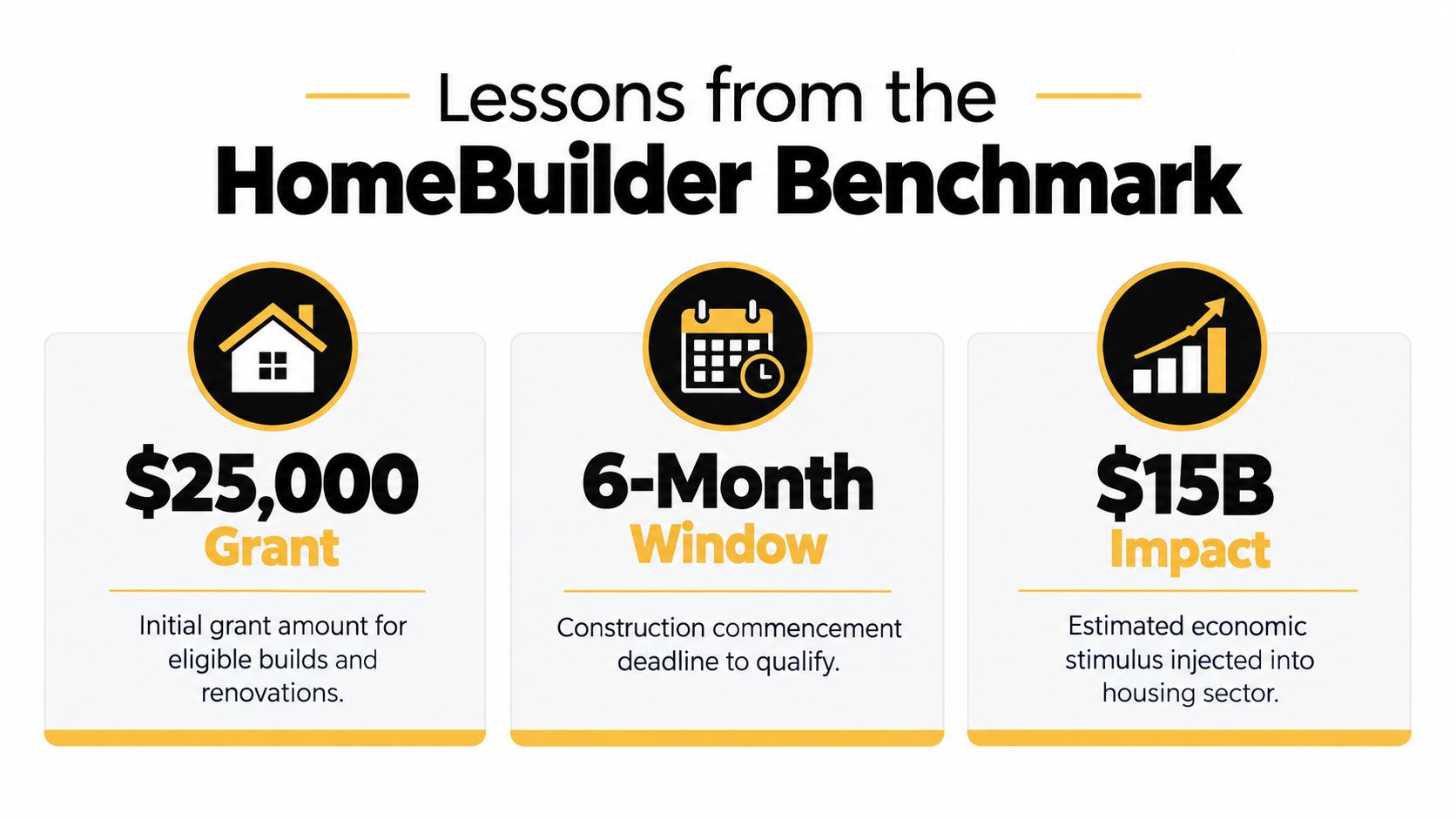
HomeBuilder is the clearest Australian example of a powerful, time-limited renovation incentive. It also exposes the mistake Melbourne homeowners make when they treat a national construction stimulus package like a standard bathroom rebate. The programme launched on 4 June 2020, offering eligible owner-occupiers an initial $25,000 grant, later reduced to $15,000 during the extended phase. The Australian Treasury HomeBuilder record sets out its timing, eligibility and payment history.
Why the threshold was far beyond a bathroom makeover
HomeBuilder renovation support applied to work valued at at least $150,000 and no more than $750,000, while the pre-renovation property value had to remain below $1.5 million. Applicants also faced owner-occupier and income requirements, including caps of $125,000 for singles and $200,000 for couples.
Those conditions show the programme's purpose. It was a large construction intervention intended to bring substantial building work into a defined period. Replacing a shower screen, vanity or floor finish was never the target. A bathroom could form part of a qualifying project, but a bathroom renovation on its own would generally sit well below the substantial-renovation threshold.
The demand was measurable, not merely strong in general terms. Treasury recorded 88,624 total applications, against an original expectation of 27,000 grants. By mid-September 2025, the Australian Government reported $2.64 billion in HomeBuilder grant payments to states and territories. 20,184 of 113,917 total funded applications involved renovations rather than new builds, and Victoria accounted for 5,412 renovation grants. These figures are recorded in the HomeBuilder programme information.
The practical lesson for Melbourne clients
HomeBuilder shows that homeowners act quickly when government support is time-limited and easy to understand. It does not establish an ongoing cosmetic bathroom grant. Its project-value, property-value and applicant conditions point to a clear planning rule: any future broad stimulus may again favour substantial, builder-managed work rather than a standalone wet-area refresh.
Use that benchmark to set your budget:
- Small cosmetic refresh: Fund it without expecting government assistance.
- Bathroom or laundry with eligible efficiency equipment: Have the provider price and document those components separately.
- Major structural renovation: Monitor confirmed programmes, but do not sign a contract based on rumours or an unverified announcement.
Build the Melbourne renovation budget so it works without a grant. If an incentive becomes available, treat it as an upside and verify it against the official rules before changing the scope.
Targeted Rebates for Wet Area Upgrades
A bathroom renovation does not qualify for a rebate because it is a bathroom. The opportunity sits in the equipment and installation, particularly where the project includes energy, water or electrification improvements. Bathrooms combine lighting, exhaust ventilation, plumbing fixtures and hot-water connections. Laundries can also involve heating, drying, washing and water-management equipment. Treat the room as the delivery point for eligible upgrades, not as the rebate category.
Victoria's energy information lists upfront discounts that may apply when the wider renovation includes approved household upgrades. Listed maximums include up to $2,800 for rooftop solar, up to $1,610 for replacing a gas heater, up to $5,530 for replacing a gas ducted heater, up to $700 for weather sealing products and up to $210 for window glazing products. Confirm the current product rules, installation conditions and provider requirements before signing, using the Victorian Government energy upgrade information.
Audit the wet area before selecting finishes
Start with the existing equipment, not the tile sample. Ask the builder and relevant tradesperson to record what will be removed, retained or replaced, then price eligible components separately from ordinary renovation work.
- Lighting: Select compliant efficient fittings before the electrical rough-in. Changing them after the ceiling closes can create extra labour and documentation problems.
- Ventilation: Check the exhaust fan, controls and installation against the applicable programme rules. An efficient-looking fan is not automatically eligible.
- Water-related equipment: Review hot-water connections and efficient fixtures during plumbing design. Confirm the model and installer requirements before purchase.
- Sealing and glazing: Coordinate draughty windows and poorly sealed openings with the bathroom or laundry works instead of leaving them to a later project.
- Heating and electrification: Use a laundry renovation to coordinate a broader heating or household electrification upgrade where the property needs one.
| Upgrade Category | Maximum Discount (AUD) | Renovation Application |
|---|---|---|
| Rooftop solar | Up to $2,800 | Coordinate with a whole-home electrical or electrification plan |
| Gas heater replacement | Up to $1,610 | Consider when the wet-area project forms part of a heating upgrade |
| Gas ducted heater replacement | Up to $5,530 | Package with wider home works, subject to eligibility |
| Weather sealing products | Up to $700 | Useful around adjoining windows, doors or draught-prone areas |
| Window glazing products | Up to $210 | Coordinate with window work near bathrooms or laundries |
These are listed maximum discounts, not automatic deductions from a bathroom quote. Require the quotation to show the renovation cost separately from any incentive confirmed by the provider. Build the project so it remains affordable without the discount.
Water-saving fixtures can still reduce household use even when no cosmetic grant applies. Compare the model, installation requirements and supporting documentation before buying, then review this guide to water-saving shower heads. Keep invoices, product details and compliance records together. That file supports the claim and protects the project if eligibility is checked later.
Navigating the Victorian Energy Upgrades Program
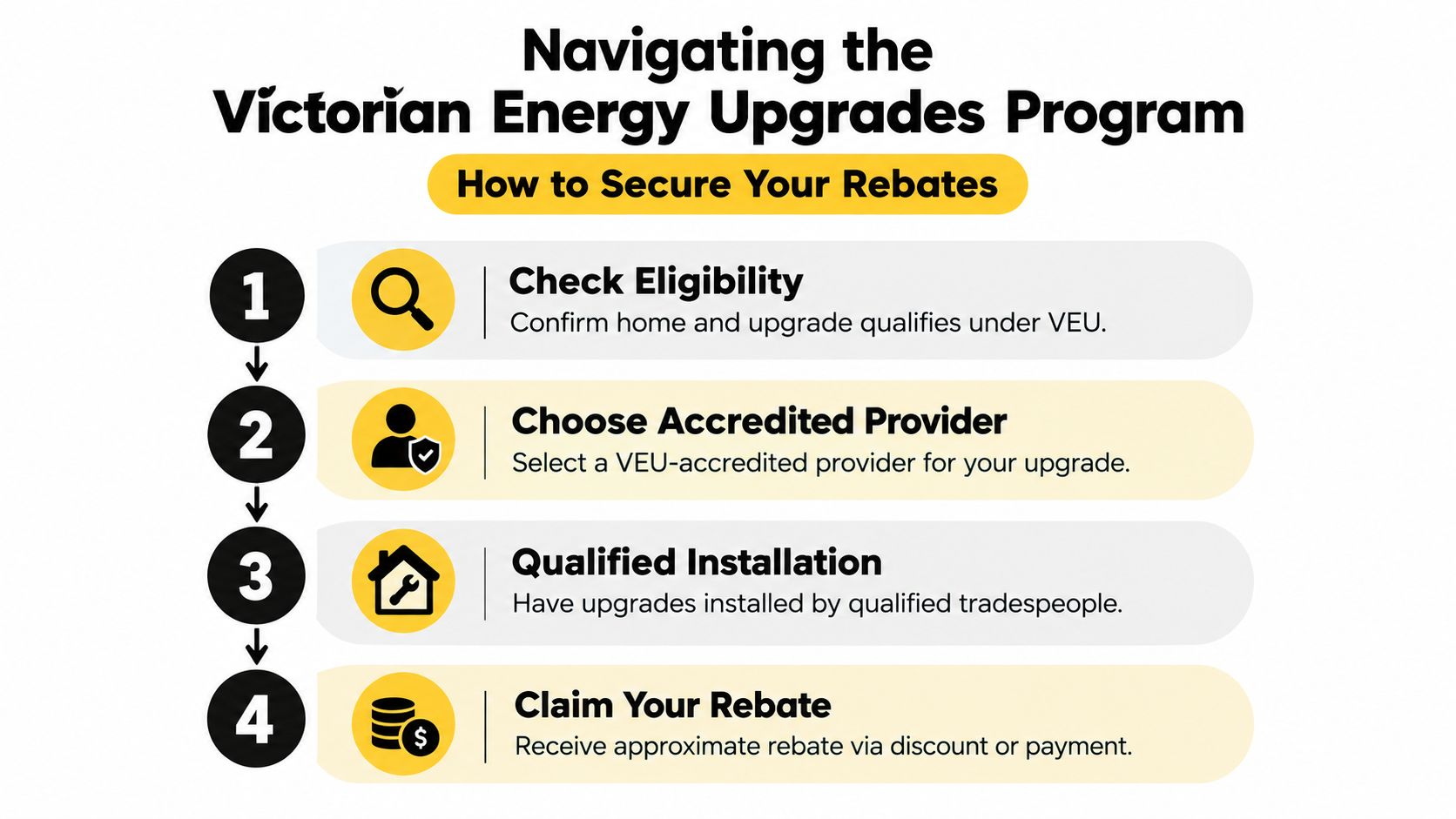
The Victorian Energy Upgrades programme, commonly called VEU, works differently from the grant process many homeowners expect. You generally don't buy an item at full price, finish the renovation and apply for a generic payment later. Government guidance states that most homes are eligible for an approximate rebate of $120, with the discount typically secured through a qualified tradesperson partnered with an accredited provider. See the Victorian Energy Upgrades guidance for households for the current framework.
The owner-occupier pathway
An owner-occupier can incorporate an eligible upgrade into the design consultation, confirm the provider arrangement and receive the benefit as an upfront invoice discount where the programme allows it. The timing is important. Product selection must happen before ordering, and the electrical or mechanical trade must know the installation is being assessed under VEU before the work is completed.
For a bathroom, that might mean checking lighting and ventilation during the electrical design. For a laundry, it may mean reviewing equipment connections or a wider household energy upgrade. Don't let the tiler, electrician and plumber work from separate assumptions. One person should hold the complete scope and identify which line items are being treated under the incentive pathway.
The process is best treated as a controlled handover:
- Confirm the home and proposed product are eligible.
- Use the accredited provider or partnered tradesperson specified by the programme.
- Install the product through the required qualified trade.
- Check that the discount appears correctly on the invoice and retain supporting documents.
A useful external comparison is Connect VPP's guide to the Family Rebate, but Victorian homeowners must still rely on the rules that apply to their own property and programme.
The investor pathway
Landlords need tighter separation. Cosmetic upgrades may improve presentation and tenant appeal, but they shouldn't be described as VEU work unless the specific product and installation qualify. Ask for an itemised invoice showing the equipment, labour, provider contribution and any non-eligible renovation spend.
The benefit for an investor is clarity. A separate efficiency line makes it easier to retain evidence for the property file and discuss tax treatment with an accountant. The renovation contract should never promise a rebate merely because an energy-related word appears in the product description.
Structuring Scope for Owners and Investors
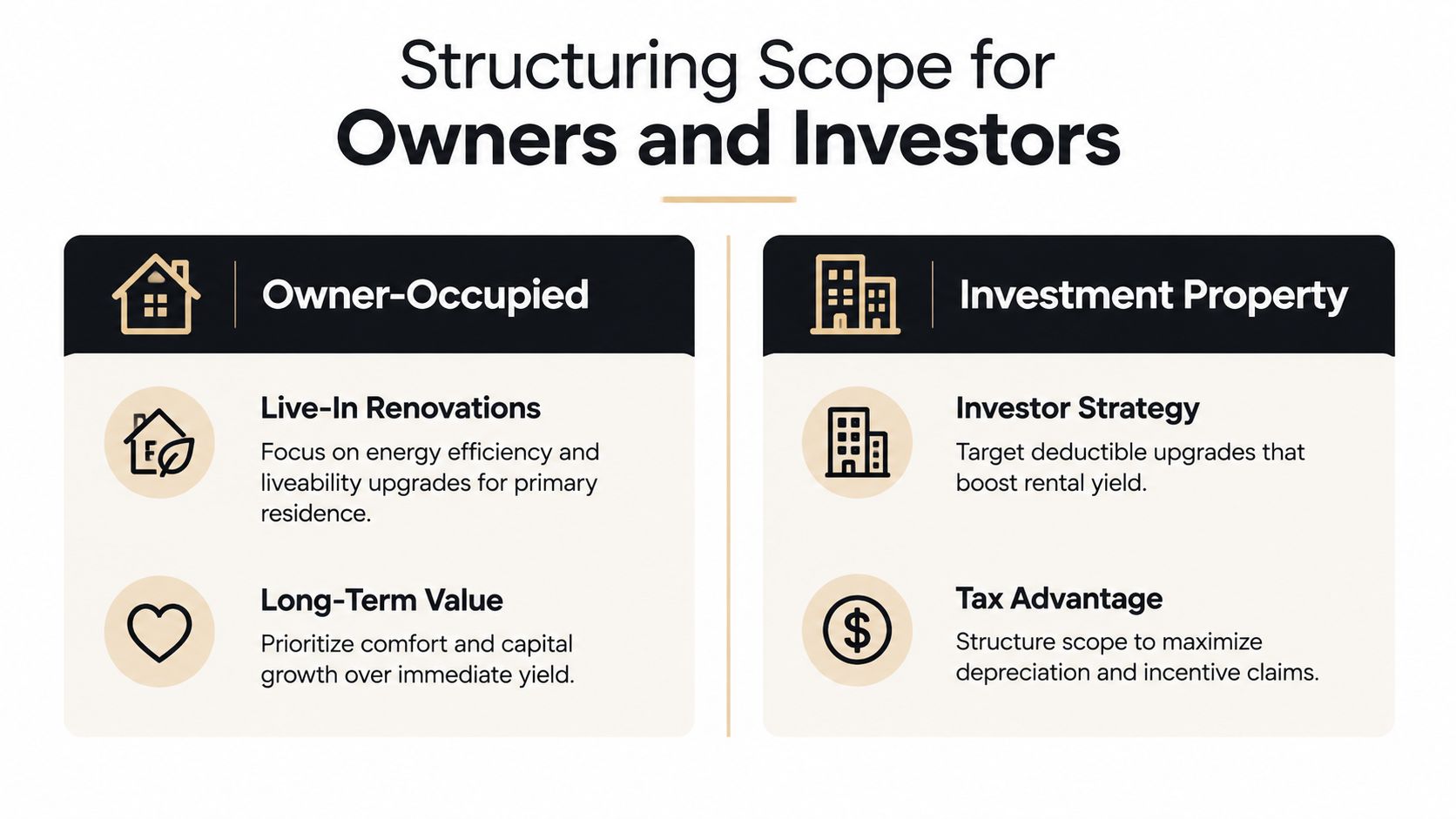
The same bathroom design can make sense for an owner-occupier and fail as an investment decision for a landlord. Owners usually value comfort, lower running costs and long-term liveability. Investors need to consider tenant durability, rental presentation, maintenance exposure, tax advice and whether the efficiency component is documented independently from the cosmetic work.
A cleaner decision matrix
| Project decision | Owner-occupied home | Investment property |
|---|---|---|
| Main priority | Comfort, usability and household running costs | Durability, tenant appeal and controlled maintenance |
| Cosmetic spend | Combine with layout and accessibility improvements | Keep practical, durable and separately itemised |
| Efficiency scope | Consider broader electrification and comfort upgrades | Confirm eligibility and preserve provider documentation |
| Contractor brief | One coordinated renovation programme | Itemised scope with clear asset and installation records |
| Tax treatment | Obtain advice if relevant to the property | Ask an accountant before classifying repairs, improvements or depreciation |
For a small bathroom, don't force an expensive whole-home energy project into the quote just to chase an incentive. Start with the items already being replaced. If the exhaust fan is old, specify a compliant replacement. If the lighting needs rewiring, confirm whether an eligible product can be installed. If the laundry already needs plumbing changes, assess whether the water-heating or fixture component belongs in the same trade package.
Separate the paper trail
The simplest structure is a base renovation schedule plus an efficiency schedule. The base schedule can include demolition, waterproofing, tiling, cabinetry, basins, toilets and general fit-off. The efficiency schedule should identify the exact product, model, installer, provider, installation date and discount treatment.
That separation helps both groups, but it's particularly important for landlords. A rebate doesn't determine whether an expense is immediately deductible or treated as a capital improvement. Your accountant needs the contract, invoices and property-use details to make that assessment.
For investors: A cheap, durable bathroom with a properly documented eligible upgrade is more useful than a vague promise that the entire remodel is “rebate approved”.
Owners can take a broader view. If the bathroom is part of a staged household renovation, coordinate lighting, ventilation, heating, solar or other eligible measures with the same project timeline. The right package may improve comfort and reduce upfront cost without pretending the vanity or tiles qualify.
The Compliance Advantage of Certified Trades
A rebate is only useful if the installation survives scrutiny and the bathroom survives Melbourne's weather, plumbing pressure and daily use. Wet-area work is not the place to rely on informal labour for waterproofing, electrical connections or plumbing alterations. A failed shower base can damage adjoining rooms and floor structures, while an unapproved electrical installation can create safety and insurance problems.
Government-linked energy programmes also depend on the right provider and qualified tradesperson. If an installer can't explain the eligibility pathway, product evidence or discount mechanism, don't assume you'll be able to repair the paperwork after the job. Ask before work starts.

What certified coordination protects
A trade-managed renovation gives each stage a clear owner:
- Plumbing: The plumber confirms fixture connections, water-saving products and any hot-water-related scope.
- Electrical: The electrician specifies compliant lighting, controls, ventilation and required certification.
- Waterproofing: The waterproofing trade prepares the substrate, applies the membrane and records the work before tiling covers it.
- Building coordination: The renovation manager aligns demolition, rough-ins, wall preparation, tiling and final fit-off.
- Documentation: The contractor retains invoices, product details and certificates so eligibility isn't based on memory.
A qualified tiler can also identify practical problems early. Uneven walls, incorrect falls and poorly positioned penetrations can compromise the finished room even when the selected fixtures are excellent. Visual quality matters, but the concealed work determines whether the renovation performs.
Homeowners who want to understand why licensing matters can learn about trade licensing with TP Training before appointing a contractor. You should also check whether your proposed work needs a permit for a bathroom renovation, particularly when the layout, plumbing or building elements change.
Don't let a rebate dictate poor construction
The incentive should support a sound renovation, not control it. If an eligible exhaust fan is unsuitable for the room, or a discounted product doesn't meet the household's needs, select the correct compliant solution and accept that the decorative project may remain fully self-funded.
Western Bathroom Renovations manages bathroom and laundry renovation stages including layout planning, demolition, waterproofing, tiling and final fit-off, with certified trades and Melbourne-specific compliance knowledge. That type of coordination is valuable when an incentive-related product must be installed and documented alongside ordinary renovation work.
Future-Proofing Through Electrification and Timing
The Australian incentive market is moving away from one simple cheque for a broad renovation. Support is increasingly tied to finance products, energy performance and electrification, which makes timing and system sizing more important than waiting for a bathroom-specific announcement. The Household Energy Upgrades Fund is part of that wider shift towards discounted finance for renovations and multi-technology upgrades.
For a Melbourne laundry, the strategic question may be broader than “Can I get a bathroom rebate?” You might ask whether the project should coordinate an eligible hot-water, heating, lighting or other energy upgrade while walls are open and trades are already scheduled. That doesn't make every item eligible, but it can reduce duplicated labour and prevent an efficiency upgrade being postponed until it becomes more disruptive.
Timing now affects the value of support
Recent changes to electrification incentives show why homeowners should verify rules close to purchase. The federal battery incentive moved to a tiered rebate structure in 2026, with the full rebate applying only to the first 14 kWh and lower support above that threshold. Solar support also changed when the deeming period moved from 6 years to 5 years on 1 January 2026, as outlined in the Household Energy Upgrades Fund information.
The lesson is practical. Don't oversize a system because a larger installation sounds like a larger rebate. Don't delay a confirmed project while waiting for a rumoured grant. Ask an accredited provider to model the current rules, then make the renovation decision based on the total installed cost, household needs and likely operating benefits.
Final recommendation: Design the bathroom or laundry you actually need, then attach verified efficiency upgrades to it. Never reverse that order.
Melbourne homeowners should keep three documents before construction begins: an itemised renovation quote, a written eligibility confirmation for each proposed incentive and a trade schedule showing who installs each qualifying product. That preparation turns the home renovation incentive from a vague search term into a manageable project component.
Western Bathroom Renovations can coordinate full and partial bathroom renovations, small bathroom makeovers and laundry upgrades across Melbourne, including layout planning, waterproofing, tiling, certified trade work and final fit-off. Visit Western Bathroom Renovations to arrange a free in-home consultation and discuss how to separate cosmetic scope from eligible efficiency upgrades before you commit to the build.
